5 AEO tools that actually do the work in 2026 (not just track)
Most AI search tools have the same ceiling. They tell you how visible your brand is in ChatGPT, Claude, and Gemini, they show you where you're losing, and then they hand the work back to you. You still have to write the content, earn the citations, fix the pages, and pitch the sources.
A smaller group goes further and does that work for you. This list is about those tools, ranked by how much they actually do, not how much they measure.
What does it mean for an AEO tool to "do the work"?
Tracking is table stakes now. The real question is what a tool does once it knows where you're losing. We judged these on five things:
- Does it produce finished work, or just recommend? A list of suggestions isn't the work. Published content, drafted outreach, and corrected pages are.
- On-page and off-page, or just one? Most of what AI cites isn't your own site. It's reviews, comparisons, communities, and earned media. Doing the work means handling both.
- Do you operate it, or delegate to it? Some tools make you build and run workflows. Others let you hand over a goal and bring back the result.
- Does it run on its own? The best tools take a recurring job and run it without being asked again.
- Where does it live? A tool you have to remember to log into gets used less than one that works where your team already does.
By those criteria, most of the category doesn't qualify. Peec, Ahrefs Brand Radar, Semrush, and even tools that market themselves on "actions" like AIclicks ultimately track and recommend, then stop, handing you a list of things to go do. The five below actually do them.
Comparison
| Tool | What work it does | How you use it | Best for |
|---|---|---|---|
| Nimt | On-page and off-page, end to end | Talk to it in Slack | Teams who want the work done, not another place to work |
| Profound | Content workflows, CMS publishing | Configure workflows in a platform | Large enterprises with a team to run it |
| AirOps | Content production at scale, plus offsite mentions | Build workflows in a platform | Content teams that want a production engine |
| Writesonic | Content creation and on-page rewriting | Work in the content platform | Content teams wanting creation and tracking together |
| Scrunch | Serves AI-readable pages, optimization guidance | Work in the platform | Teams focused on technical, on-page AI readiness |
1. Nimt
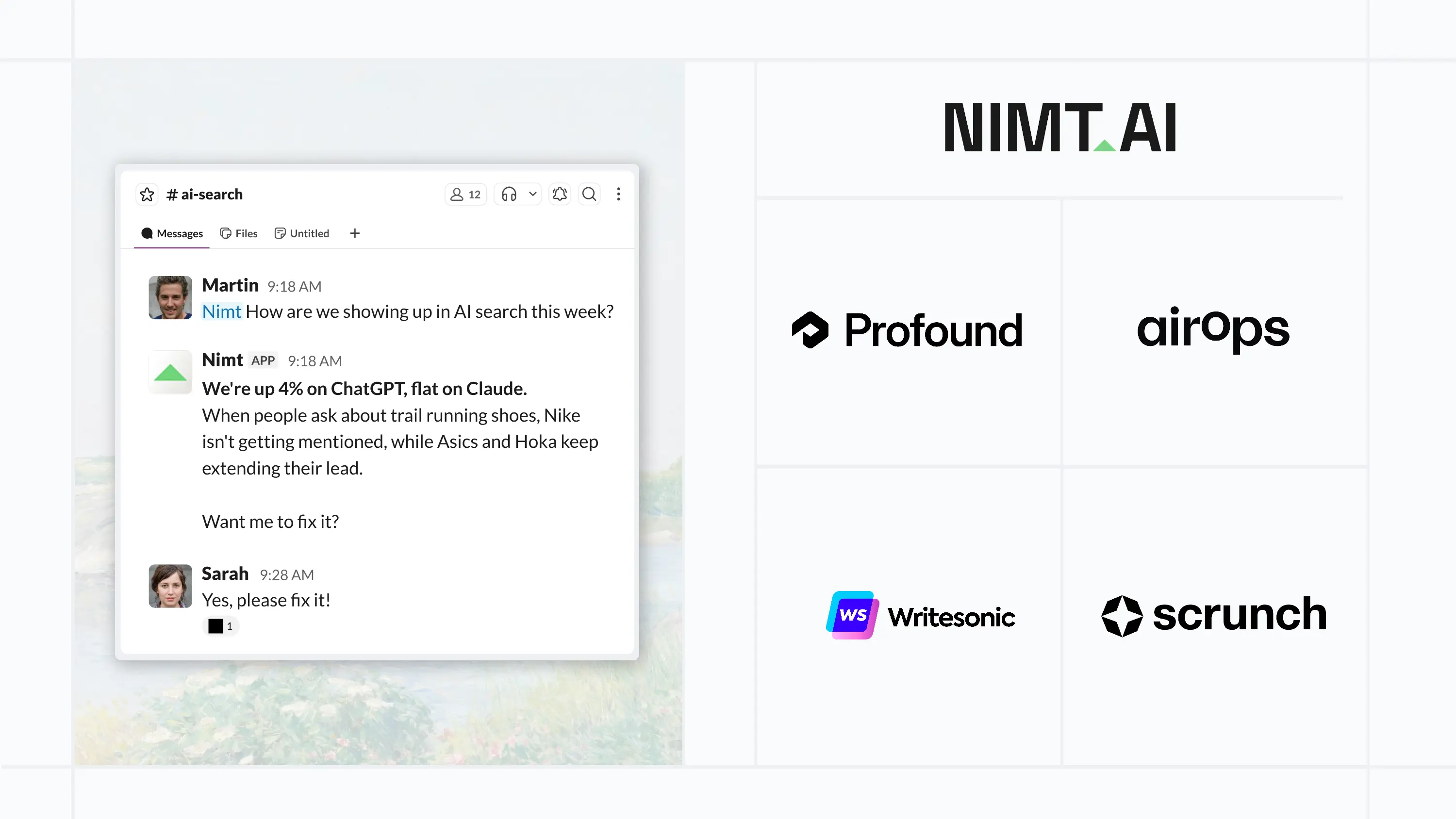
Nimt is an AI search coworker that lives in your Slack. You add it, and it sets up your tracking across all seven major AI models automatically. You don't configure anything. From there, you talk to it like a colleague, hand it a goal, and it brings back finished work.
And it does the full range of work, not a slice of it. Nimt writes content, fixes pages, adds schema, finds the specific journalists and media outlets worth pitching, drafts the outreach to earn citations, and handles social content for the platforms AI models actually pull from, like Reddit and LinkedIn. It has a deep set of skills and tools built in for everything that affects AI search, on-page and off-page. You can also set recurring jobs it runs on its own, daily, weekly, or monthly.
It keeps the numbers too. Nimt builds a full AI search dashboard and updates it automatically every day, with a Data Studio integration for reports whenever you need them. You get the readout and the work, in one place, without living in a dashboard.
What makes the work good is where it comes from. Nimt was founded by former agency founders and built on decades of agency experience, turned into a coworker. It's the specialist you'd otherwise have to hire, except it already knows your AI search data cold and works where your team already works.
Best for: agencies and in-house teams that want AI search handled end to end, not just measured. Where it falls short: it doesn't yet offer AI crawler analytics or its own prompt volume data, and SOC 2 is coming soon rather than shipped.
2. Profound
Profound is the most established platform here, built for large enterprises. Beyond deep tracking, it offers content workflows with templates, a knowledge base, and publishing straight to CMSs like WordPress and Sanity. Its Opportunities panel surfaces specific journalists and threads to target.
It genuinely does a lot of work. The trade-offs are real, though. You build and run the workflows yourself, it's priced and designed for enterprise teams with the headcount to operate it, and it's one more platform to log into. Marketing teams rarely want another place to work. They want the work done where they already are.
Best for: large enterprises with a dedicated team and budget to run a platform. Where it falls short: you configure the work rather than delegate it, it's another platform to live in, and the entry tier tracks ChatGPT only.
3. AirOps
AirOps is a content operations platform built around AI workflows, and it's pointed squarely at AI search. It describes itself as shipping the content that gets you cited, with an agent, reusable workflows, and an Offsite product for finding and securing third-party mentions.
For teams that need to produce content at scale, it's a powerful engine. The catch is that it's a platform you build and operate, with a real learning curve, and it leans toward content production rather than the full conversational, do-it-for-you range.
Best for: content-heavy teams that want a workflow-based production engine. Where it falls short: you build and run the workflows, and it's less of a hand-it-over coworker than a power tool.
4. Writesonic
Writesonic started as an AI content platform and added a GEO layer, including an agent that rewrites pages for AI search, adding FAQ blocks, comparison tables, and the self-contained passages AI engines tend to cite. For teams that want content creation and AI visibility tracking in one workspace, it covers a lot of ground.
Its AEO features sit on top of a broad content and SEO suite, so the depth is more content-and-on-page than full off-page citation work.
Best for: content teams that want creation and tracking bundled together. Where it falls short: AEO is a layer on a wider suite, and off-page work like PR and outreach isn't the focus.
5. Scrunch
Scrunch monitors your AI visibility and focuses on making your site AI-ready. Its standout is the Agent Experience Platform, which serves lightweight, machine-readable versions of your pages so AI agents can parse and cite them more easily. It also flags crawl errors and gives optimization guidance.
That's real work, but a specific slice of it, weighted to technical and on-page readiness rather than producing content or earning off-page citations.
Best for: teams focused on technical and on-page AI readiness. Where it falls short: it guides and serves pages rather than producing the full range of content and outreach.
Related articles
View all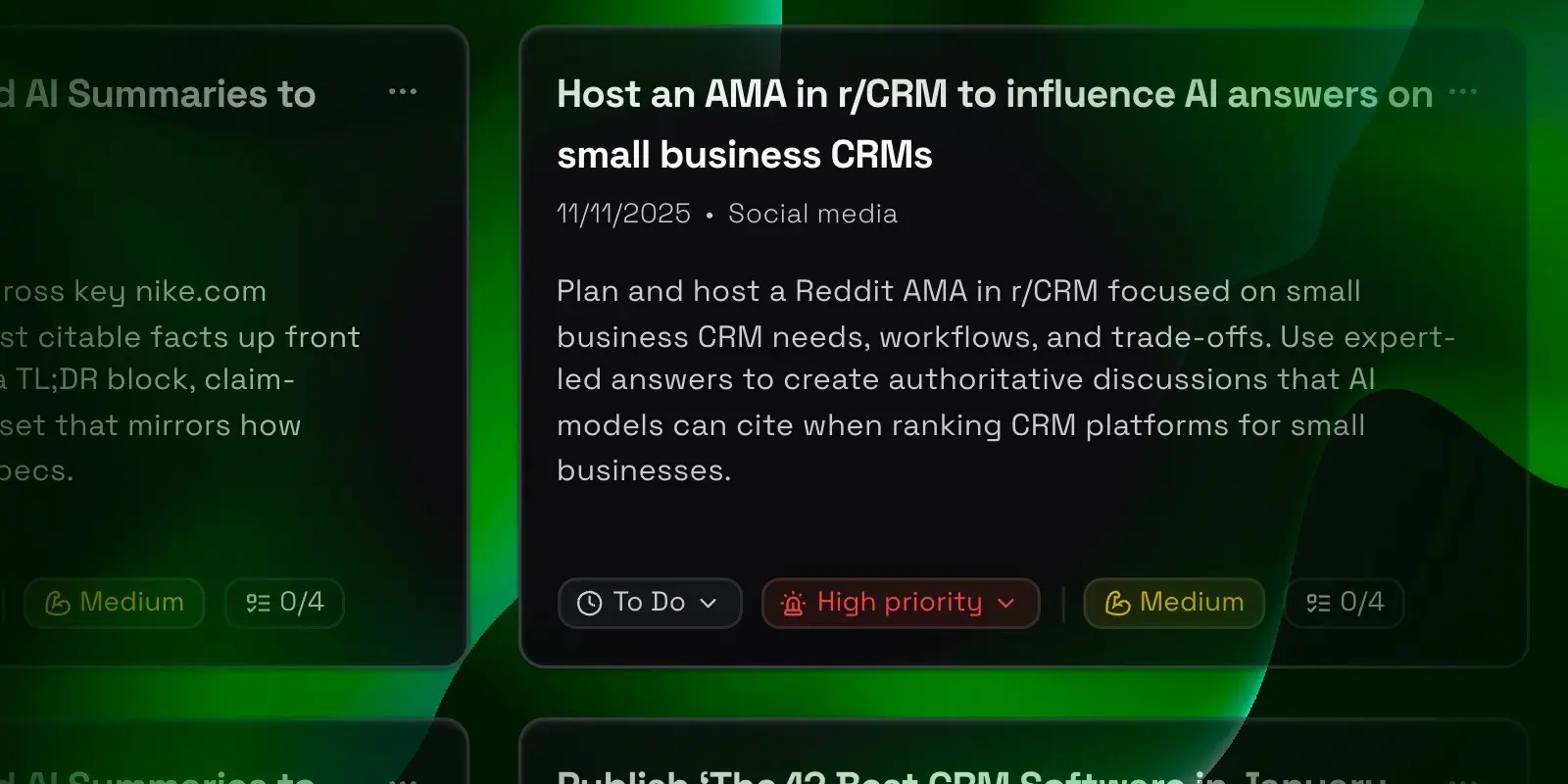
Martin Bergström
From data to action: Use Nimt.ai Boost Actions to automatically increase your AI visibility
Get exact instructions on what to do next. Explore Nimt.ai and Boost Actions today.
Martin Bergström
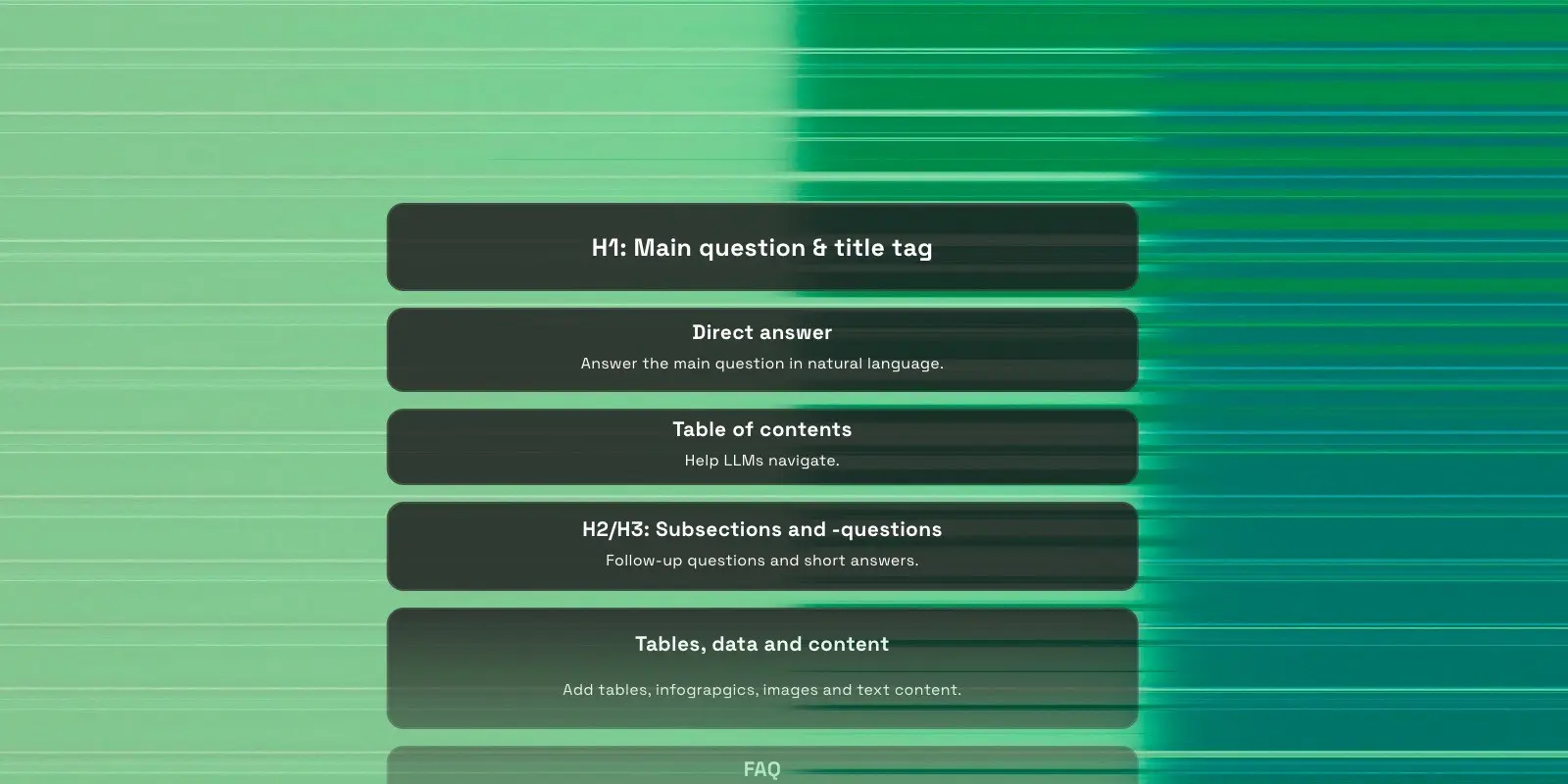
How to structure your content to rank in AI search
You might have the best content in the world, but if an AI model can't parse it, you won't get cited. Unlike humans, who appreciate fancy layouts, LLMs (Large Language Models) crave structure, clarity, and code. If you want ChatGPT and Gemini to use your content as the source of truth, you need to structure your webpages according to the AEO Blueprint. Here is the anatomy of a winner.

Martin Bergström
4 steps on how to win recommendations in the AI era
For 20 years, the goal of SEO was simple: Rank in the top 3 blue links. But the game has changed. Today, users aren't just searching; they are asking. And platforms like ChatGPT, Gemini, and Perplexity aren't just listing links; they are synthesizing answers.